


Horizontal and vertical wall art do more than fill space. They change how a room feels, how it is read, and even how movement is experienced within it.
Most interiors are built from a mix of horizontal and vertical structure already. Furniture stretches outward across a room, while architectural elements such as doors, windows, and ceilings introduce vertical rhythm. Wall art sits directly within this dialogue.
Understanding orientation is less about style and more about perception.
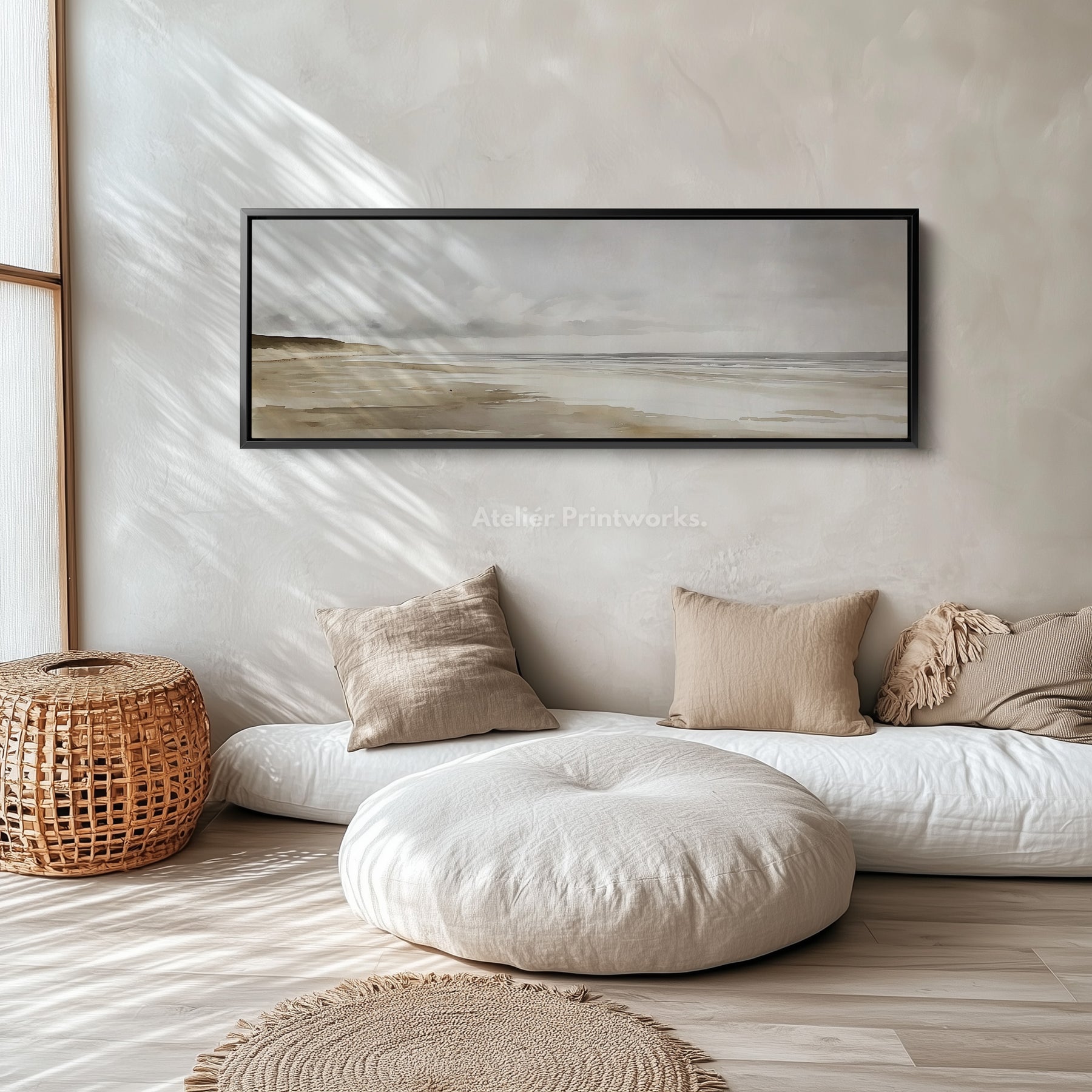
Horizontal wall art and visual grounding
Horizontal compositions naturally mirror the way we experience stability in interiors. They extend across a surface rather than upward, which creates a sense of calm, balance, and grounding.
This is why long horizontal wall art works so well above sofas, beds, and dining tables. It reinforces the structure that already exists in the furniture below it.
In wider rooms or open plan spaces, horizontal art also helps define a visual zone. It quietly says where one area begins and ends without needing physical separation.
It is particularly effective when a room feels slightly too open or undefined.
Explore our horizontal wall art collection for pieces designed around this proportion.
Vertical wall art and spatial height
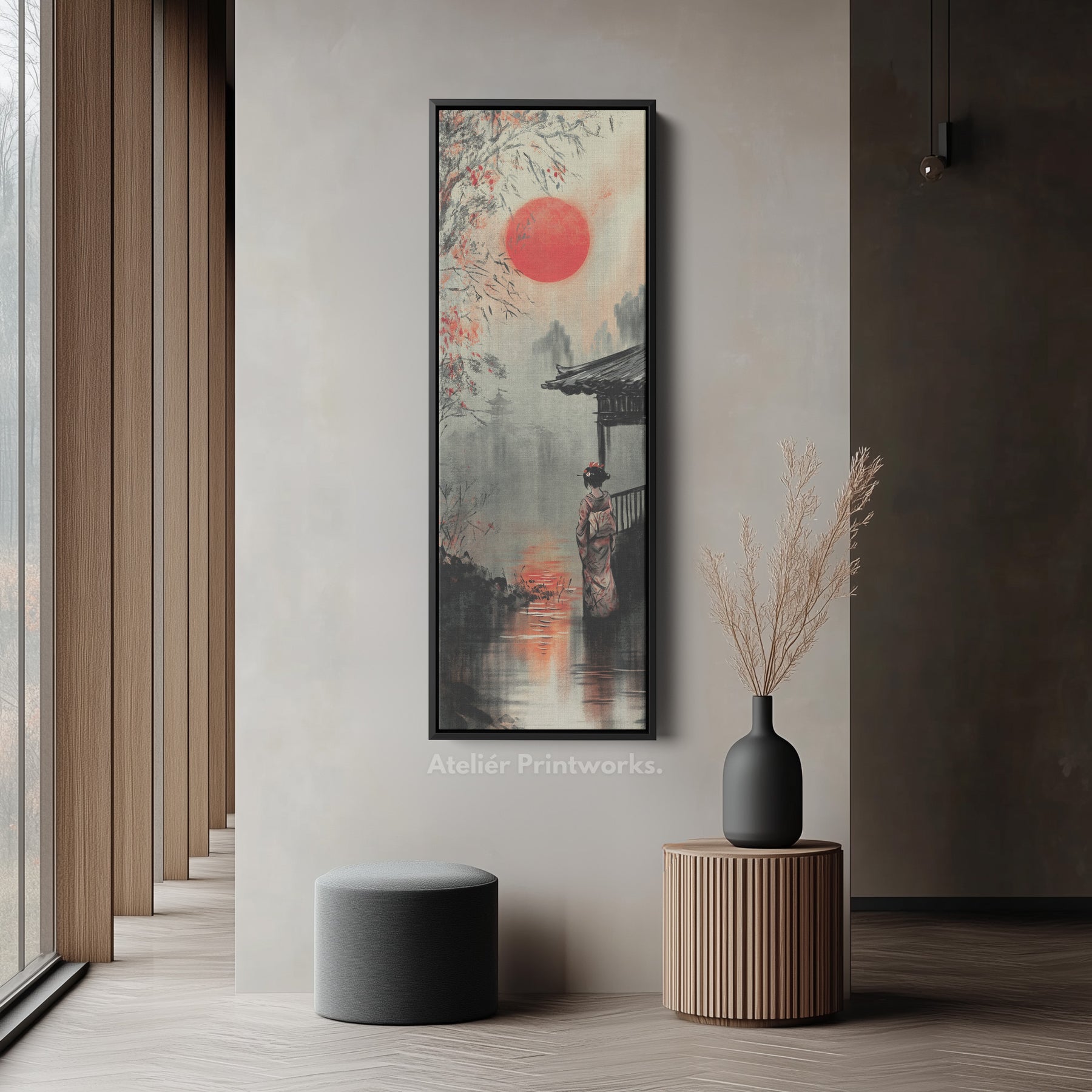
Vertical compositions do the opposite. They draw the eye upward, introducing a sense of height, movement, and structure.
In narrow or transitional spaces, tall vertical wall art prevents walls from feeling forgotten or visually compressed. Instead of spreading across space, it builds upward focus.
This is especially effective in hallways, between windows, or in tighter architectural gaps where horizontal pieces feel too wide or visually heavy.
Vertical art also works well in rooms with lower ceilings, where it helps counteract horizontal compression.
Our vertical wall art collection is designed specifically for these kinds of proportions.
Why most modern homes need both
Modern interiors rarely consist of simple square rooms. They are often open plan, fragmented, or transitional. This means no single orientation is enough on its own.
Horizontal art stabilises. Vertical art activates.
Used together, they create rhythm across a home rather than treating each wall as an isolated surface.
A more intentional way to think about orientation
Choosing between horizontal and vertical wall art is not about preference. It is about how you want a space to behave.
Horizontal pieces slow a room down. Vertical pieces lift it. The most balanced interiors often use both deliberately, rather than defaulting to one.


