


The frame you choose has a significant impact on how a piece of wall art sits within a space. It can change the sense of weight, contrast, and even scale, subtly shaping how the artwork interacts with the room around it.
At Atelier Printworks, there are three main framing styles available: floating frames, classic frames, and stretched canvas. Each offers a different visual language, and the right choice depends on both the artwork and the space it will live in.
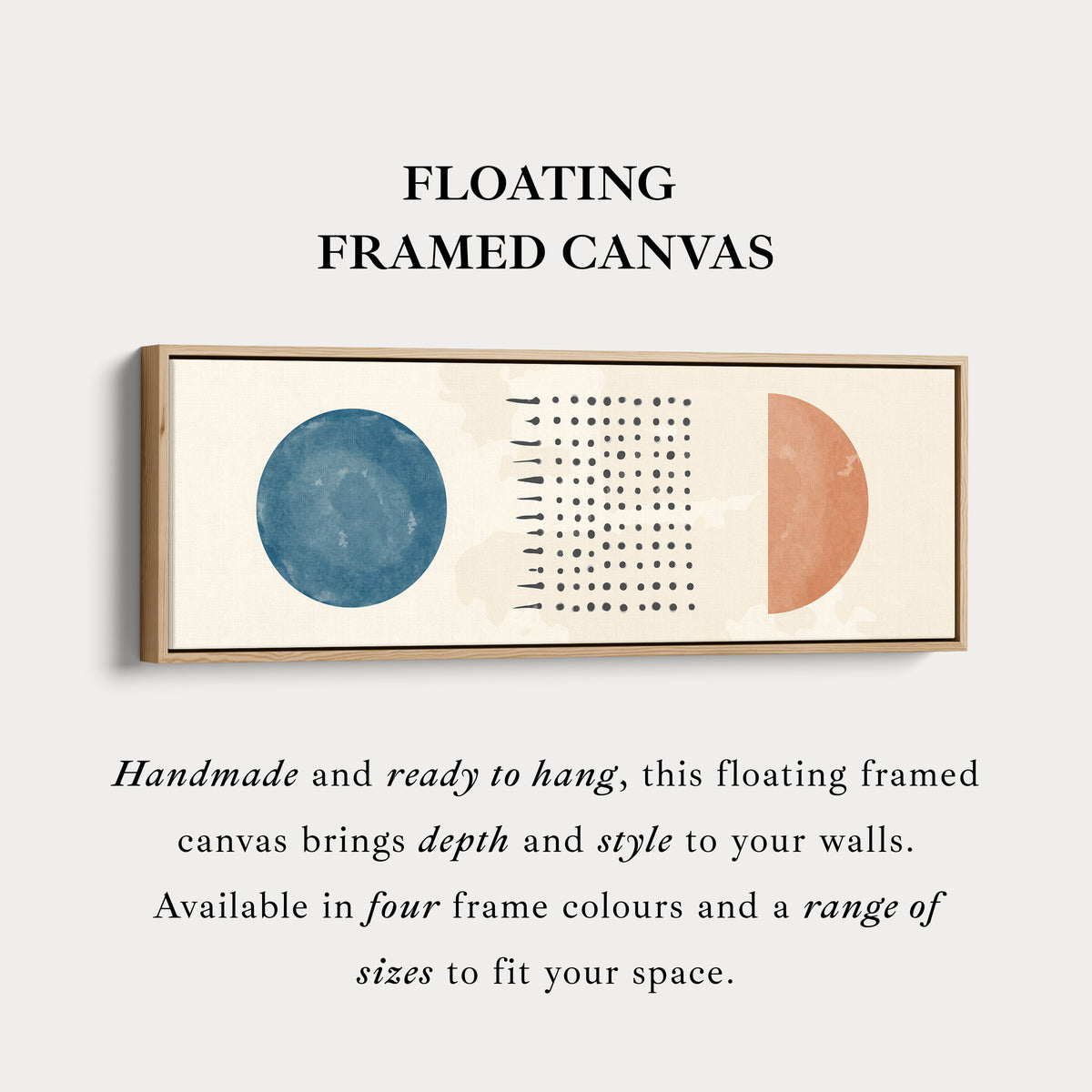
Floating Frames for a Contemporary, Gallery Feel
Floating frames are designed to create the effect of artwork suspended within the frame, with a subtle shadow gap that introduces depth and presence.
This style works particularly well for:
- abstract wall art
- geometric compositions
- minimal or modern interiors
- larger statement pieces
Floating frames feel architectural and refined, making them a strong choice for long horizontal wall art above sofas or wide dining walls where you want the artwork to feel intentional without adding visual weight.
They are especially effective when paired with pieces from the geometric wall art collection, where structure and balance are central to the design.
Classic Frames for a More Defined, Timeless Look
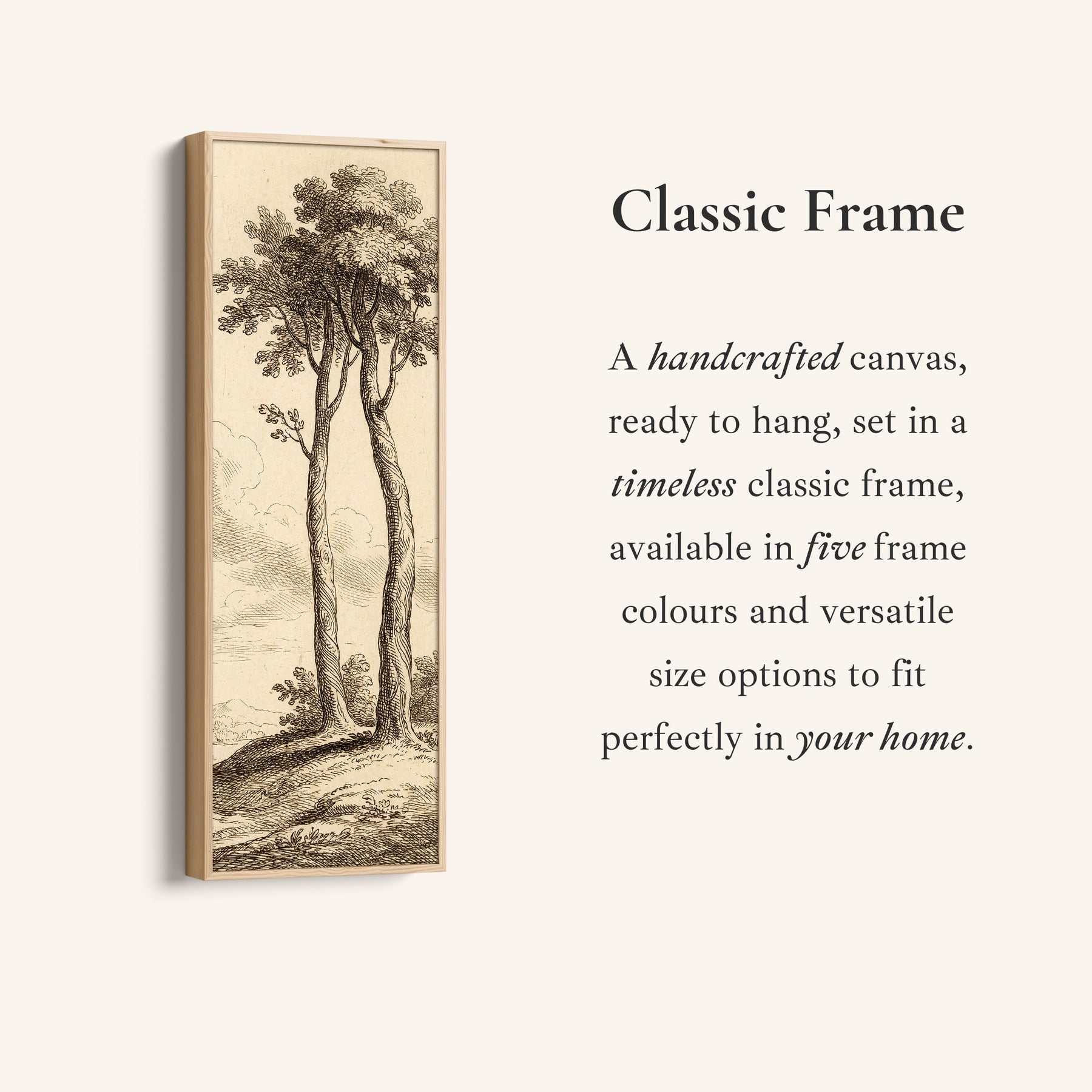
Classic frames offer a more traditional, defined edge around the artwork. They create a clear boundary between the print and the wall, helping to ground a piece within more structured or layered interiors.
This framing style works well for:
- traditional or transitional interiors
- vintage-inspired wall art
- smaller or more contained wall spaces
- vertical wall art in hallways or narrow areas
Classic frames are particularly effective when you want the artwork to feel presented as an object in its own right rather than visually merging with the wall. This makes them especially suitable for long narrow wall art, where definition helps the piece stand out in tighter or more awkward spaces.
Stretched Canvas for a Minimal, Frameless Finish
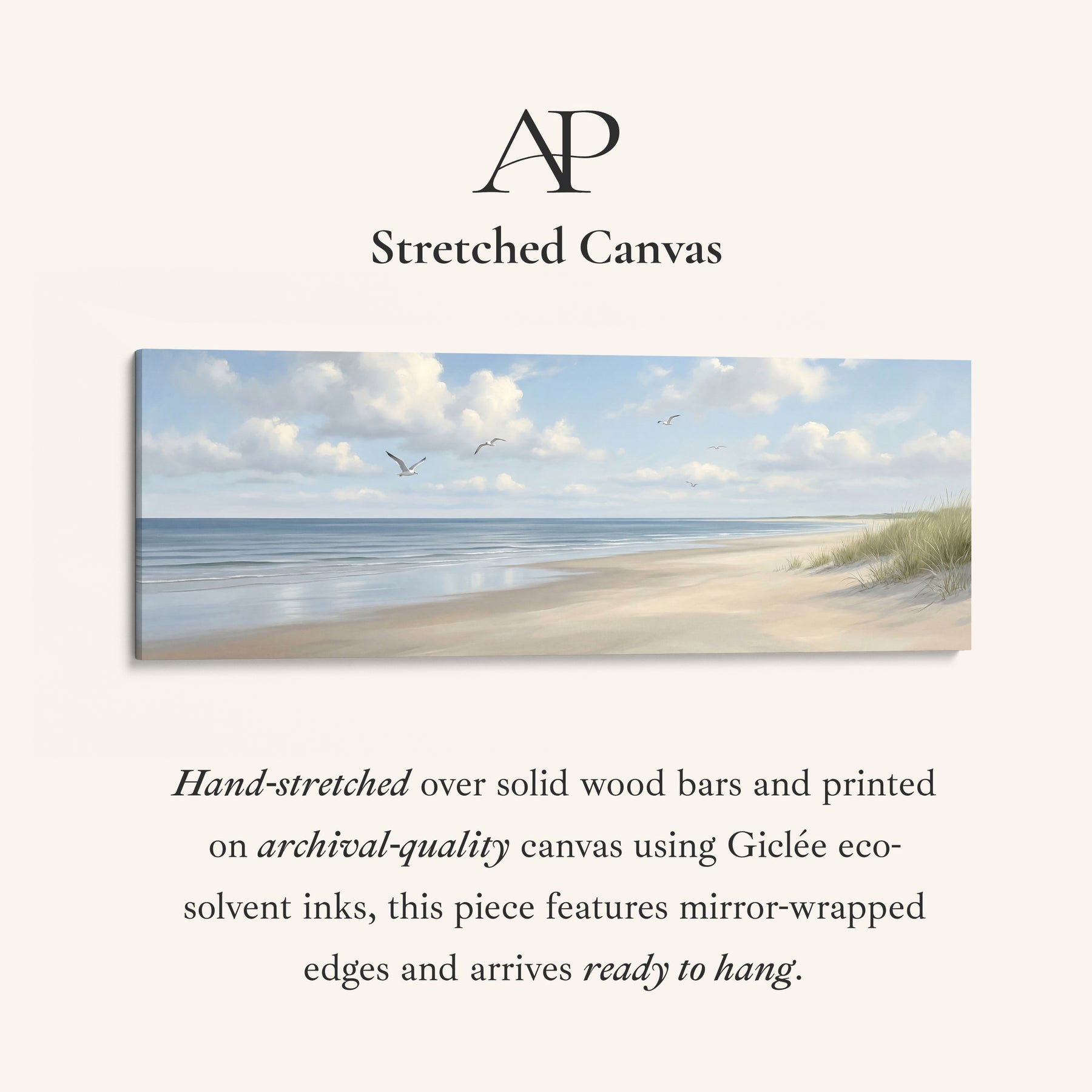
Stretched canvas removes the frame entirely, allowing the artwork to extend cleanly over the edges of the stretcher bars.
This creates a softer, more relaxed presentation that works well for:
- modern minimalist artwork
- coastal or nature-inspired interior styles
- lighter, airy rooms with natural light
- large horizontal or panoramic formats
Stretched canvas is often chosen when the artwork is intended to feel calm and uninterrupted. It works particularly well in open plan living spaces, where a softer visual presence helps maintain flow.
For this reason, it pairs naturally with pieces from the coastal wall art collection, where atmosphere and openness are central.
Choosing the Right Frame Based on the Artwork
A useful way to decide between framing styles is to consider the tone and structure of the artwork itself.
More structured geometric pieces often benefit from floating or classic frames, as they reinforce clarity, proportion, and form.
More organic or atmospheric artwork tends to work well as stretched canvas, where the absence of a frame allows the image to feel more immersive and continuous.
Scale also plays a role. Large horizontal wall art often benefits from floating frames to maintain presence without heaviness, while tall vertical pieces can work equally well in floating or classic frames depending on the surrounding space.
Frame Colour and Material Options
Once the framing style is chosen, colour and material refine how the piece sits within the room.
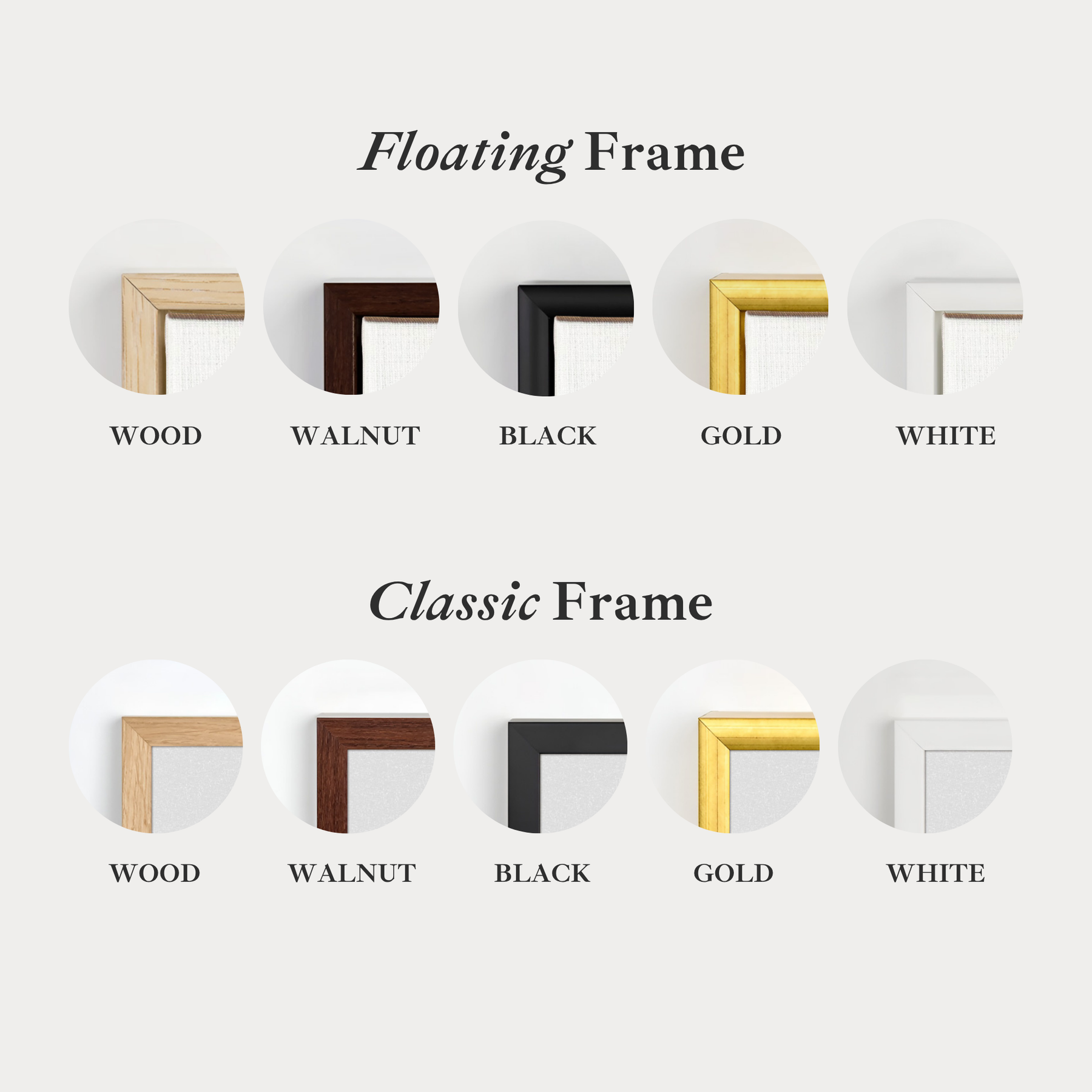
Black frame creates contrast and definition. They work particularly well in modern interiors or when you want the artwork to stand out against lighter walls. They are especially effective for geometric and abstract wall art where structure is key.
White frame feels softer and more subtle. They blend into light interiors and suit calm, minimal spaces where the artwork should remain the focus.
Wood frame introduces warmth and a natural tone. They work well in interiors with timber, neutral palettes, or organic textures, and pair naturally with nature-inspired wall art.
Walnut frame offers a deeper, richer wood tone. They add weight and depth without the starkness of black, making them ideal for grounding lighter compositions or balancing warm interiors.
Gold frame introduces a more elevated, expressive finish. They can add contrast in minimal spaces or bring a subtle decorative edge to more refined interiors.
A Simple Visual Guide
If your space feels modern and minimal → choose floating frame or stretched canvas
If your space feels structured or architectural → choose floating frame
If your space feels traditional or layered → choose classic frame
If your space feels calm, coastal, or nature-led → choose stretched canvas
If your wall feels large or empty → choose floating or classic frame for added presence
If your artwork is bold or geometric → choose floating or classic frame for definition
If your artwork is soft or atmospheric → choose stretched canvas for continuity
A Considered Approach to Framing
Choosing a frame is not just a finishing touch. It is part of how the artwork interacts with the space.
The right combination of frame style, colour, and material can shift a piece from subtle to statement, from integrated to defined, or from modern to more classic in tone.
Whether you choose a floating frame for a gallery-like feel, a classic frame for structure, or a stretched canvas for a softer presence, each option offers a different way of experiencing the artwork.
Explore the full range of different framing options or browse our bestseller wall art collection to see how different frames change the feel of each piece.


