


Diptych and triptych wall art has become one of the most effective solutions for styling large walls, tall walls, and awkward empty spaces that single-panel artwork often struggles to resolve. These multi-panel formats, also known as split canvas wall art or multi panel wall art, allow a single composition to be divided across two or three pieces, creating rhythm, balance, and a stronger sense of scale within a room.
A diptych refers to a two-piece wall art set, while a triptych is a three-piece wall art arrangement. Although the terms come from traditional art history, they are now widely used in modern interiors as a way to describe large format wall art that is split across multiple canvases.
Explore Atelier Printworks diptych wall art here and the triptych wall art here.
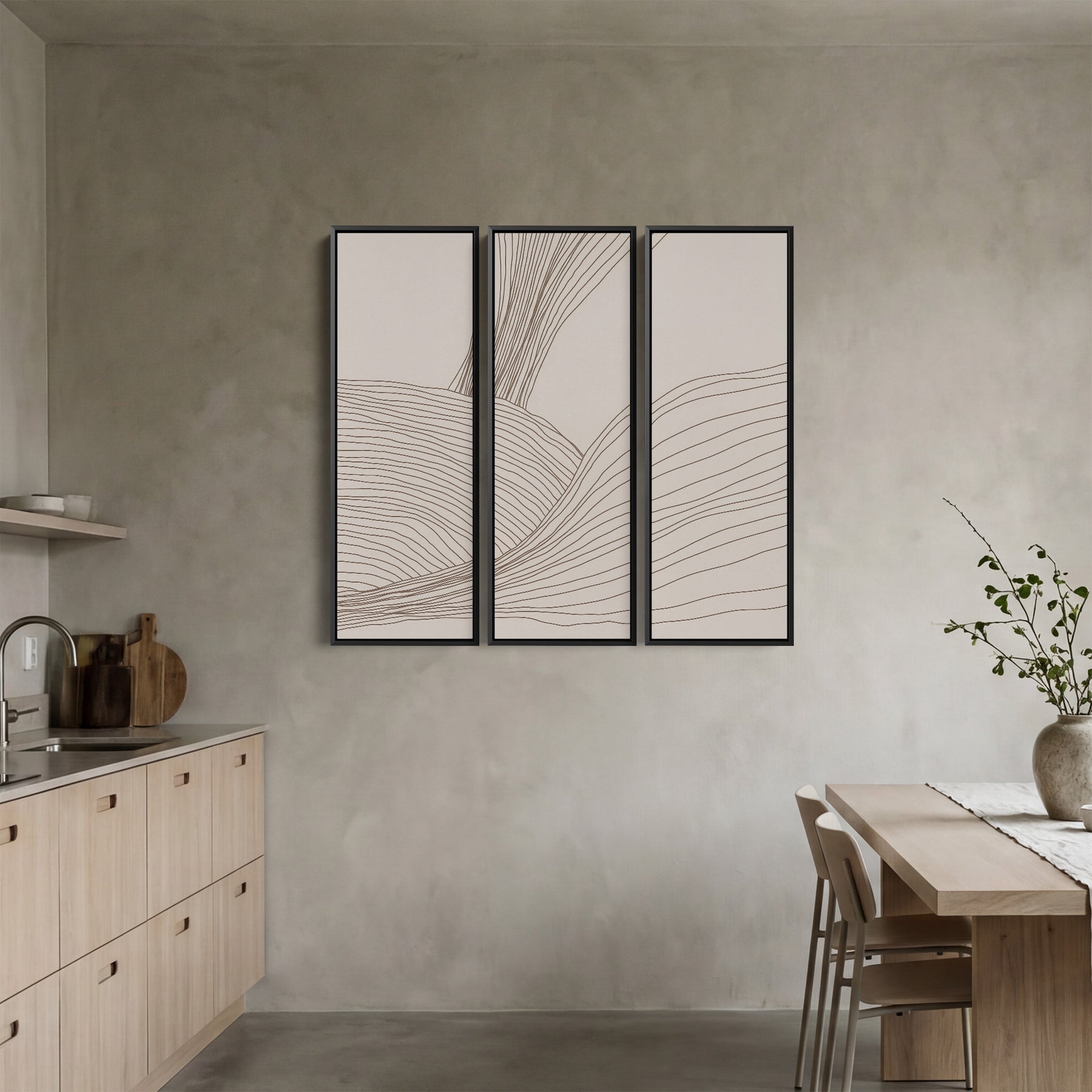
Why diptych and triptych wall art works so well in modern interiors
Large blank walls are one of the most common design challenges in contemporary homes. Open plan layouts, high ceilings, and wide chimney breasts often create surfaces that feel visually empty even after furniture is in place. Standard-sized artwork can easily feel too small in these contexts, which is where diptych and triptych wall art becomes particularly effective.
By splitting the composition across multiple panels, the artwork naturally extends across the wall without feeling heavy or overwhelming. Instead of one dominant frame, the eye moves across the gaps between panels, creating a sense of flow and visual rhythm. This is why multi panel wall art is often used in interior design for large living rooms, dining spaces, and hallway feature walls.
Diptych and triptych formats are often the answer when a large wall feels difficult to style, particularly when single artworks feel too small or lost within the space.
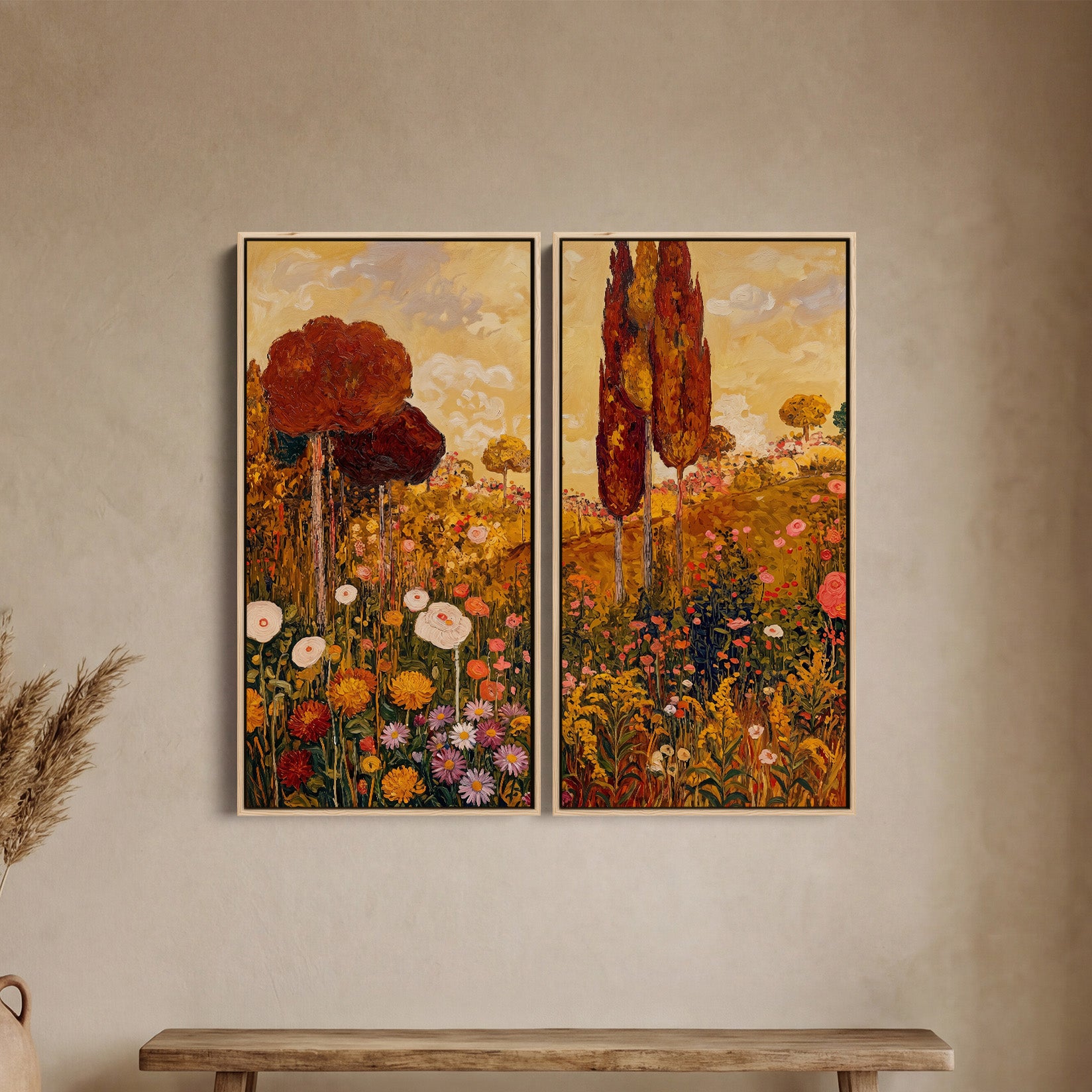
Diptych vs triptych wall art and how to choose
A diptych wall art set is usually the most effective choice when you want something balanced, minimal, and understated. The two-panel structure creates symmetry without becoming overly complex, which makes it ideal for medium to large walls where you still want breathing space around the artwork. Diptychs are often used above sofas, in bedrooms, or widely hung on either side of a large element like a fireplace.
A triptych wall art set, on the other hand, is designed for stronger visual presence. The three-panel structure naturally creates more width and more rhythm, which makes it ideal for very large walls, open plan living areas, statement spaces or longer hallways. Triptychs are often used as panoramic wall art alternatives, especially above long sofas, dining tables, or large architectural features.
Both formats work particularly well as long horizontal wall art, especially when the goal is to anchor a space and define a clear visual zone within an open interior.

The role of diptych and triptych wall art in solving awkward spaces
One of the most overlooked advantages of diptych and triptych wall art is how effectively it solves awkward wall proportions. Many homes include spaces that feel difficult to style, such as wide but low walls, tall chimney breasts, or transitional areas between rooms. These are often referred to in search queries as awkward wall art spaces or tall narrow wall art problems.
Because multi panel wall art can be spaced intentionally, it allows you to visually reshape a wall without physically changing it. A wider gap between panels can make a composition feel more expansive, while a tighter arrangement can create a more unified, structured look. This flexibility is what makes split canvas art particularly useful in modern interiors where architectural proportions are not always ideal.
In rooms where vertical height is the challenge, diptychs and triptychs can be combined with tall vertical wall art to restore balance. In wider rooms, they help prevent walls from feeling empty or disconnected from the rest of the space.
Style direction for diptych and triptych wall art
Although diptych and triptych wall art is a structural concept rather than a style in itself, certain visual directions work particularly well in these formats. Nature wall art is one of the most popular choices because it naturally flows across multiple panels without requiring a central focal point. Minimalist multi-panel wall art is another strong choice, particularly for interiors that rely on space, light, and proportion rather than visual complexity.
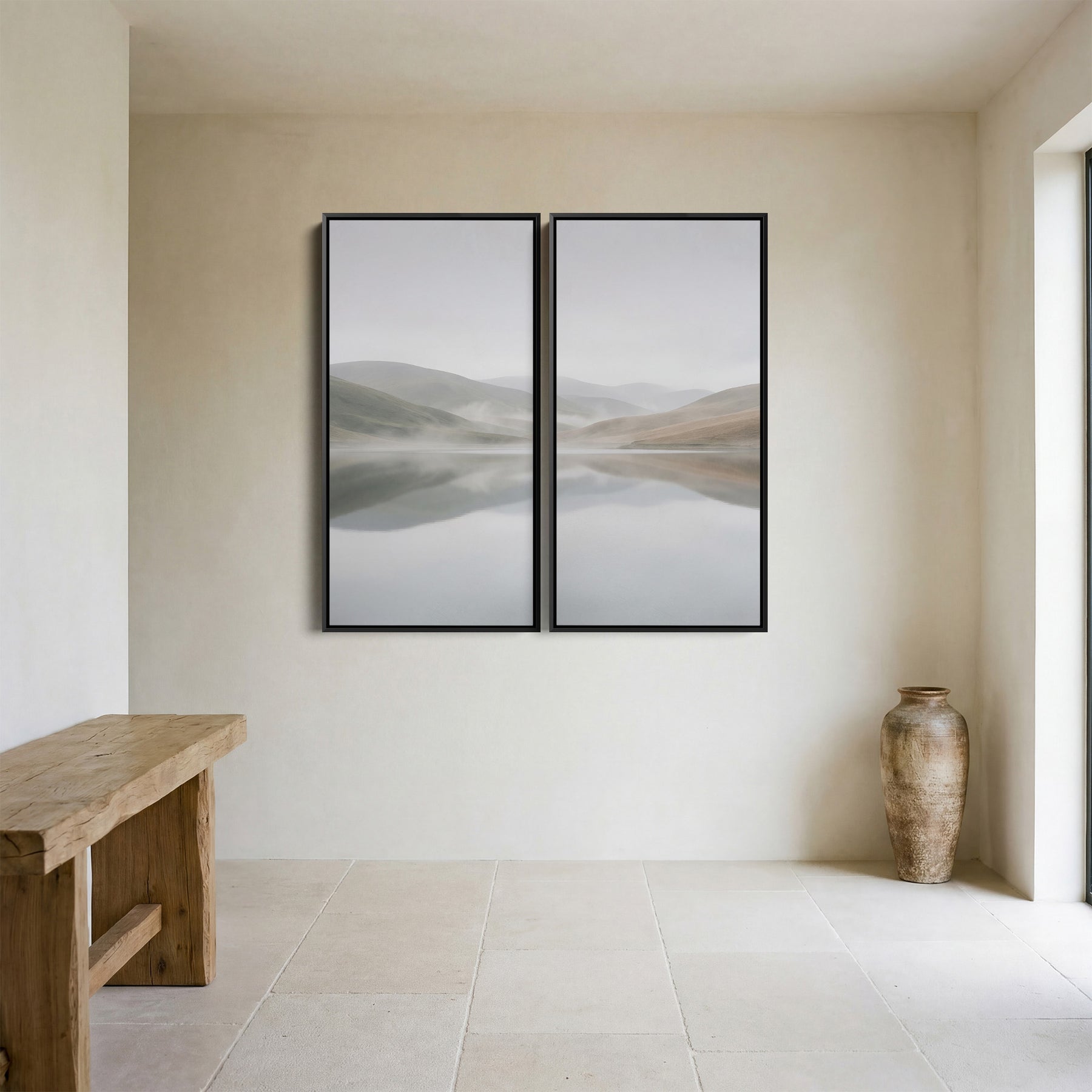
A more intentional way to think about large wall art
Choosing diptych or triptych wall art is not simply about filling space. It is about understanding how a room behaves visually and how scale, proportion, and rhythm interact within it. Large walls are not empty problems to solve quickly, but architectural features that can define the entire feeling of a space.
When multi-panel wall art is used correctly, it does more than decorate a wall. It structures it. It gives rhythm to open interiors, balance to awkward proportions, and presence to spaces that would otherwise feel unfinished.
In many cases, a well chosen diptych or triptych is not just wall art. It becomes the anchor that holds the entire room together.


